National
Gov. Buni Constructs Major Drainage Systems, Bridges to End Flooding in Damaturu

By Micheal Chukwuebuka
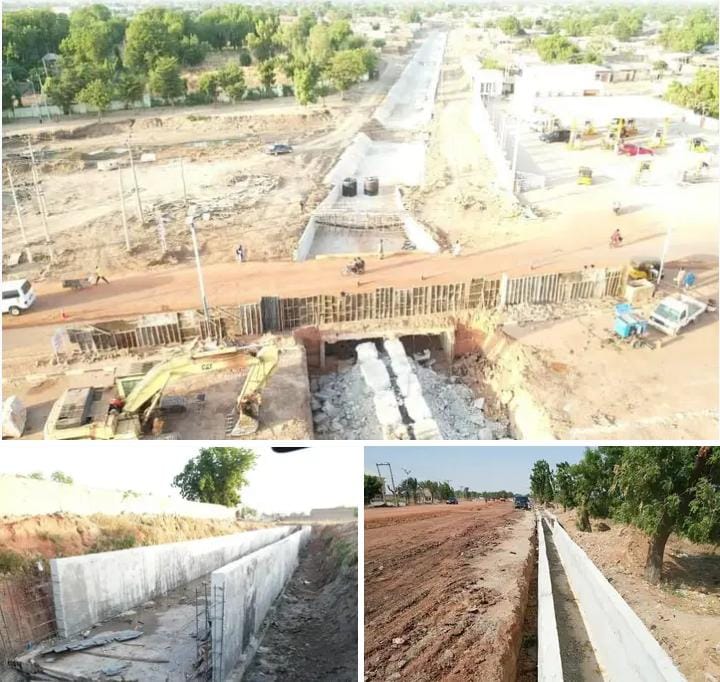
The Yobe State Government under the leadership of Governor Mai Mala Buni, has made remarkable progress in the construction of major bridges and drainage channels across Damaturu metropolis aimed at permanently addressing the problem of flooding while also supporting dry-season farming.
The large-scale project cuts across key parts of the state capital, stretching from Nasarawa through Nayi-Nawa, extending behind Shagari via Pompomari New Layout, and further beyond Waziri Ibrahim and Sumsumma, where floodwater is being redirected for the benefit of dry-season farmers in areas such as behind the High Court, Waziri Ibrahim, Sumsumma and adjoining communities.
So far, major milestones have been recorded with the completion of a bridge at Waziri Ibrahim Bypass, another at Pompomari New Layout, as well as the completion of one side of the Pilgrim Bridge along the Potiskum Road.
To ensure timely delivery, the construction company which is currently executing the project simultaneously in five different locations, including Waziri Bypass, where road rehabilitation and drainage construction are ongoing; the Buratai residence axis, where a major floodwater channel is being constructed; the Pilgrim area, where one side of the bridge is under construction; and Nasarawa, where large drainage infrastructure is also underway.
The project when completed will deliver enormous benefits to Damaturu and environs. It will significantly reduced the recurring menace of flooding, thereby protecting lives, homes, and public infrastructure from destruction.
By preventing floodwater from cutting off major roads, especially around the Waziri Ibrahim and Pompomari areas, the project will greatly enhanced the free flow of traffic and easing movement within the city.
In addition, the drainage system will preserved road networks from damage caused by stagnant water, while at the same time improving environmental sanitation by preventing waste accumulation and pollution.
Beyond flood control and urban safety, the project will contribute immensely to agricultural development. By redirecting floodwater for irrigation, it is boosting dry-season farming and supporting hundreds of farmers engaged in the cultivation of crops such as cucumber, watermelon, onion, Irish potato, lettuce, tomato, pepper, rice, wheat and other produce across the Waziri and Sumsumma axis.
This intervention is also creating opportunities for youth empowerment, reducing unemployment and discouraging social vices through productive engagement.
The project covers major areas including Nasarawa, Nayi-Nawa, Pompomari, Behind the High Court, Behind Waziri Ibrahim and Sumsumma, where floodwater is systematically channelled for agricultural use.
The work is progressing steadily in line with specifications, and it is expected to be completed in the near future .