Opinion
Kestin Pondi”s Communicated Culture in a Carnival of Culture without Cloud and Clash, By Enewaridideke Ekanpou

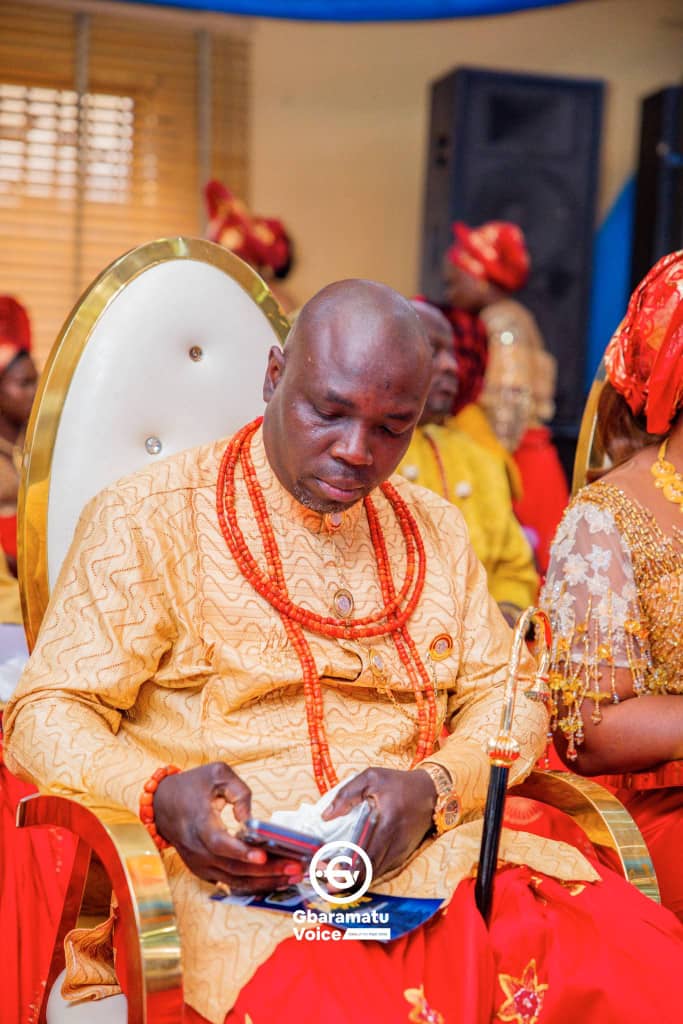
Varied perceptions journey around High Chief Engr. Kestin Pondi whose roots spread to Gbaramatu and Ogulagha Kingdoms in Warri South-West and Burutu Local Government Areas of Delta State. However the varied perceptions held on him, which are shaped by his daily engagements, he is clearly situated as a philanthropist with generous tentacles that perform miracles of empowerment in every space.
Philanthropy is the distinguishing dominant identity badge of Pondi in every space he finds himself. His distinguishing philanthropy as a radiating identity marker in every space – traditional, religious or secular – is what everybody connects to comfortably however the status in the society. For the poor and the rich, for the christians, muslims, African traditional religionists and mystics of every persuasion, for politicians, industrialists, comedians, wrestlers, actors, actresses, dancers, musicians and sportsmen, Pondi is the philanthropic edifice that shelters people without discrimination.
Centred on Pondi”s dominant image as a non-discriminatory philanthropist, it would be a ‘dialectical mathematics’ of resistance if anyone saw Pondi as a curator, dramatist and director of plays and movies with a passion for culture in any formation because these characterisations do not fall into his universally acknowledged image as a borderless philanthropist metaphorically likened to Bill Gates of America. To the surprise of those who know him, Pondi suddenly cut the image of a passionate lover of culture, dramatist and director of plays prodigiously gifted with the capacity to direct plays and movies to hold a motley crowd spellbound. I wish I had solicited the amazing directorial dexterity of Pondi when my plays THE PLOT AGAINST PEOPLE and THE WANTED MAN IN CAMP FOUR were recently staged at Gogigbene! This hidden talent of Pondi was brought to the fore when his father-in-law, Captain William Ayagbene Elaweremi, was buried in Ayakoromo on 6 December 2025 in a carnival of culture without cloud and clash.
Elaweremi died on 1 May 2025 in Warri at the age of 87 after a glorious life as a captain in the maritime business of sailing to different countries as an employee in different maritime companies. Born on 15 March 1938, he had aboriginal roots buried in Ayakoromo and Isaba in Burutu and Warri South-West Local Government Areas of Delta State, and Peretoru in Ekeremor Local Government Area of Bayelsa State.
Precisely, Elaweremi was an employee of NBTC who progressed through the ranks from a deckhand and River Master to a Captain and retired in 2005 after thirty-five years of blemish-free service. Married to Beauty Idowu and Evelyn Ebikaboere of Ayakoromo with fifteen children, forty-one grandchildren and one grandchild, he was the centre of Ayakoromo urban community in Warri as all important meetings on communal unity and welfare were held in his house. He was never associated with grimaces while endless meetings were always held in his place; he did not feel disturbed one day however the obvious encroachments on his private life because he philosophically saw himself as the home of accommodation and communal spirit.
Life is a very precious asset over which no one prays for early wear and tear. This precious asset has left Elaweremi after 87 years of fruitful uninterrupted use. Life snuffed out of Elaweremi after 87 years, his beloved daughter, Chief Blessing Kestin Pondi, wept inconsolably. In the love-provoked perception of Blessing, 87 years was one week to her. Her husband, Kestin Pondi, was deeply touched by these flowing tears that streaked Blessing’s face.
Emotionally staggered and deeply touched by Blessing’s inconsolable weeping, Pondi devised a two-pronged strategy to celebrate the deceased and psychologically retrieve his wife from the emotional quicksand she had sunk into. In the caged thoughts of Pondi, when a deceased person whose achievements and age demanded celebration was memorably celebrated in a cavalcade of cultures, even the emotionally stung and devastated mourners would experience a surge of energy to dance and unconsciously forget the pangs of death.
5 December 2025 was the day chosen for the social wake of late Elaweremi . Towards a befitting social wake, the corpse of Elaweremi had to be conveyed from Warri to Ayakoromo. Elaweremi, as a captain, lived the cream of his life on ships and tugboats at sea navigating safe paths for NBTC. For Pondi this sailor must be culturally celebrated on the surface of waters for reasonably long hours that approximated his voyages on earth. Ordinarily, the journey from Warri to Ayakoromo would take 45 minutes on a speedboat powered by 75-Yamaha engine, but to approximate the life-voyages of late Elaweremi, Pondi was creatively full of plans to prolong the journey from Warri to Ayakoromo beyond the known 45 minutes.
To celebrate Elaweremi remarkably was Pondi”s brainwave. Geared toward a remarkable celebration of Elaweremi, the services of two giant virgin barges were employed. Aesthetically, the barges were rigged with white canopies and decorated chairs. Atop the barges were richly attired men and women, followed by the great musician, King Prince.Y. P. Dono Abraham, and exceptionally talented dancers. With a moving repertoire of songs from King Abraham with a designated stage on the barge, graceful dancers creatively grooved to an assortment of lyrically and instrumentally communicative Ijaw songs.
From the booming instrumental dexterity emanating from King Abraham’s stage, the barges came alive with captivating legend songs and swiftly-changing dance steps. While the booming songs and graceful dance steps told a great cultural story of celebration, aesthetically built 200-horse-powered speedboats and wooden outboard engine boats from Ogulagha, Kurutie and many others from Gbaramatu Kingdom filled to the brim with gorgeously dressed skillful entertainers routinely moved around the barge in a manner grandly dignified and slow enough for spectators to catch the culturally packaged entertainers on board. Riparian communities like Gborutubo, Asiyaigbene, Ophorugbala, Gbekebor, Oguforu, Okegbene and Bobogbene on the way to Ayakoromo were memorably treated to this intentional cultural celebration, as the barges slowly sailed towards Ayakoromo with a solemn dignity.
After a dignified sail of over four hours through various communities, the barges eventually saw Ayakoromo. Right in the middle of the Ayakoromo River, the barges strategically stopped to sail as a systematic cultural entertainment. From different parts of the Ayakoromo River came different boats. These wooden outboard engine boats carrying cultural troupes emerged and broke into celebratory dance on their boats. Before these cultural troupes on boats came, a traditional war boat of Ayakoromo people carrying black-powdered faces attired in black clothes, boat decorated with horizontally arranged fresh palm fronds on both the right and left teeth of the boat captivated spectators with their synchronised dance steps and traditional war songs. Young boys dancing energetically on the wooden engine-powered boat was amazing. The traditional gun boat and the other wooden engine boats carrying cultural troupes beautifully circuited the barges in dignified processions and gave the Ayakoromites a maritime entertainment they were historically treated to for the first time. The aesthetically decorated wooden outboard engine boats from Gbaramatu and Ogulagha Kingdoms with talented dancers moving around the barges in solemnly dignified formations was a compelling spectacle of indescribable cultural beauty.
For over thirty minutes Ayakoromo was intriguingly imprisoned by a well-packaged maritime entertainment memorably directed by Pondi. After the theatrically calculated period of memorable maritime entertainment, as dexterously directed by Pondi from his invisible enclosure, though visibly present without being anatomically part of the celebratory drama, only tracing the celebratory contours on his mind without words, the barges eventually sailed to the waterfront of Elaweremi for everybody to disembark. The disembarkation of the over two million people swallowed by the barges began immediately after the dignified evacuation of the golden coffin to the home of the deceased, accompanied by the vivacious dance of the casket troupe and pall-bearers.
The coffin of Elaweremi eventually home in Ayakoromo, everybody agreed Pondi had given his father-in-law a historically referential ennoblement unprecedented in the history of burial of father-in-laws. For all it was over after the maritime ennoblement. Nobody anticipated another notable culturally packaged celebration during the social wake in the night.
The phenomenal philanthropist called Pondi, proved everybody wrong . At night another drama of celebratory ennoblement for Elaweremi was witnessed. Beyond a cavalcade of dignitaries from all walks of life brought together from politics, the entertainment world of actors, actresses and comedians to business, Urhobo, Igbo and many other cultural entertainers were on ground with amazing dance steps. As if these varied cultural entertainers were not enough, Dr. Izonebi Alfred and Chief Kingsley Takemebo were brought to give the crowd a live musical entertainment. Takemebo entertained the crowd in the day and left while Alfred did his live entertainment in the night till dawn. For these two Ijaw musicians, superb was the matching word for their electrifying performances.
In the midst of all these cultural entertainments, food and drinks patrolled the aesthetically striking arena of over two million people like the stars of the sky. Thirty live cows were available for the entertainment of the crowd. Out of the thirty cows for the party, the Ayakoromo community had many cows generously given to them to slaughter and share among themselves. The remaining cows were slaughtered one by one and prepared for the crowd to eat in varied African and continental dishes dictated by the choice of the prospective eater. The cows slaughtered and consumed were like the famous PEPENIGE meat; however they were slaughtered and consumed, they were always available for the people to devour.
Many confessed the cows outnumbered the people when turned into food prepared in varied dishes for the people to choose and eat. All the guests felt ‘saturated’ but this was not even enough for Pondi. At dawn he shocked people with the sharing of rice bags and groundnut oil for people who graced the party. They were his souvenirs for the people who graciously put up appearance in the funeral ceremony. Nobody had done this in Ayakoromo before now. All these were painstakingly done to wipe the tears of Blessing.
Predictably, everybody thought Pondi had done enough to stop the flow of tears on Blessing’s face. Tears still streaked and wrinkled the face of Chief Mrs Blessing when her own father was being lowered into the grave. Deeply touched by the tears that streaked her face, he dramatically told her with love to empty her tear duct at the graveyard so that at home she would no longer shed tears of despair and become emotionally inconsolable. For Pondi uninhibited tears shed profusely at the graveyard would be a magical emotional catharsis relevant to full recovery from pains produced by the death of one’s beloved father. Blessing cried her last cry at the graveyard in preparation for full recovery from the pangs of her father’s death, as it was philosophically anchored on by Pondi at the graveyard. Cry now and cry no more at home after the interment was Pondi”s cautionary philosophical message for his beloved wife, Blessing.
Elaweremi had been solemnly and nobly buried in Ayakoromo in a manner that signalled approval from God and the gods because the day came to pass without anger from the sky. The sky sent no tears upon the earth, except the brief drizzling that greeted the barges on arrival in Ayakoromo. This brief drizzling was a symbolism of sympathy, recognition and support from God and the gods whose supportive benevolence was communicated and marked by the friendly weather.
Again and again it must be repeated that 5 December 2025 was a carnival of culture without cloud and clash in Ayakoromo because there was no rain on that day after the very brief drizzling symbolically seen as a welcome when the barges arrived; neither was there a fight where soldiers and civilians clashed over minutiae. The presence of soldiers and police in their large numbers was enough to smother any thought of clash. Even God and the gods were spectacularly benevolent and supportive from their world because the day ended joyously without the disruptions of thoughtless rain-invasion heralded by angry dark clouds overlooking the crowd. It was a remarkable day for Pondi”s carnival of culture without cloud and clash. High Chief Engr. Kestin Pondi”s name shall live forever on the lips of Ayakoromo people as the story of his storied celebration of late Captain William Ayagbene Elaweremi shall be preserved in folktales and ballads for every succeeding generation to applaud and appreciate.
Dr. Ekanpou writes from Akparemogbene, Delta State.