National
Reps Promise More Support To EFCC, NFIU To Tackle Financial Crimes

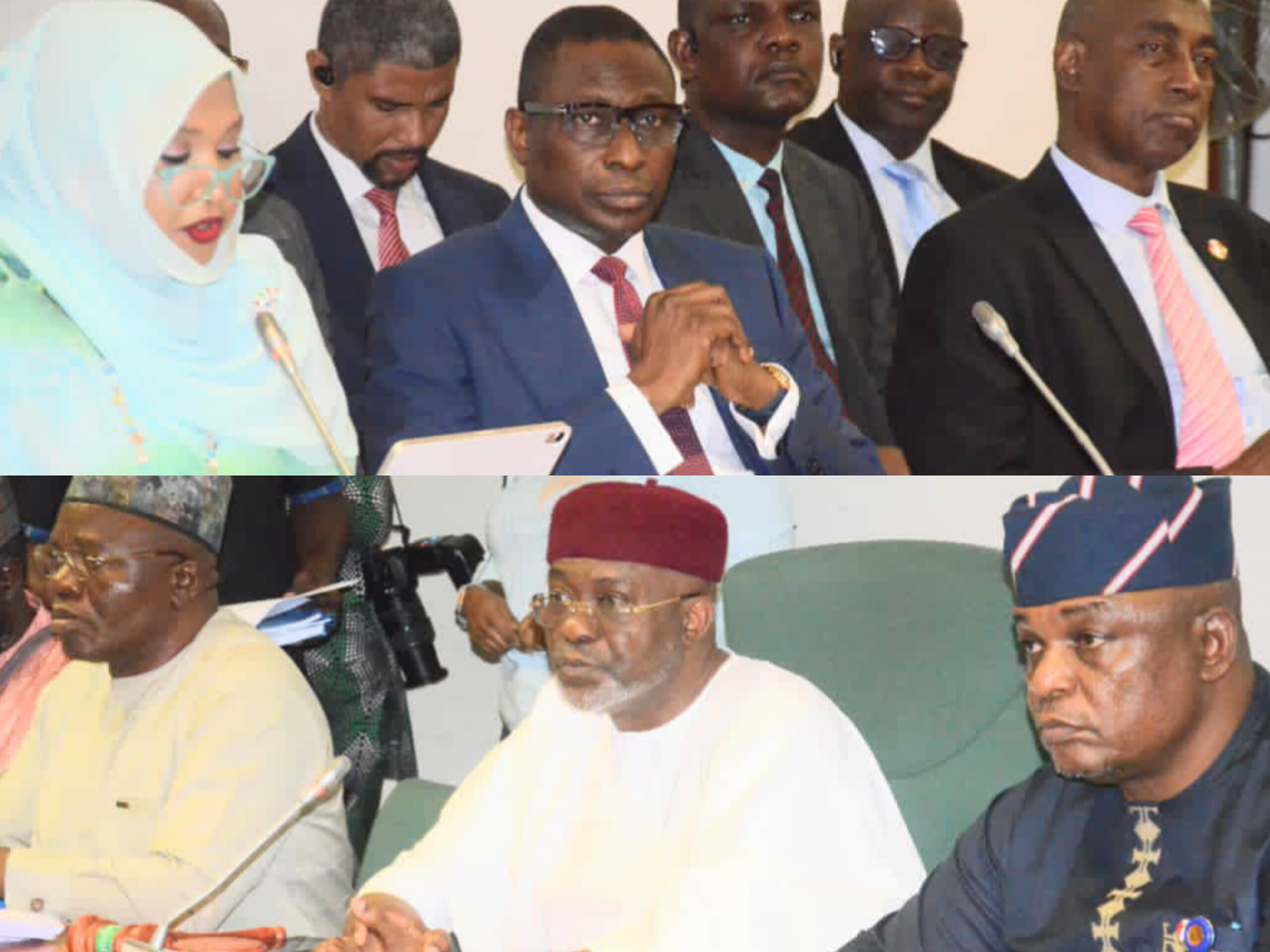
By Alkassim Bala Tsakuwa, Abuja
The House of Representatives has promised to continue to provide strong legislations as well as all other supports to strengthen the Economic and Financial Crimes Commission (EFCC) and the Nigeria Financial Intelligence Unit (NFIU) to tackle financial crimes in the country.
The Chairman, House Committee on Financial Crimes, Hon. Ginger Onwusibe made the promises at the 2026 budget defence session with the EFCC and NFIU on Monday.
He said the House is committed to make effective and impactful legislative interventions and to enact robust, coherent and responsive laws that will help agencies tackle the complexities of evolving financial criminal activities.
Hon. Onwusibe informed that the House is currently considering four key bills aimed at promoting transparency, protecting public resources, restoring confidence in the financial system and aligning Nigeria with global best practices.
The lawmaker said the bills include; a Bill for an Act to Establish the Economic and Financial Crimes Commission (EFCC); a Bill to Amend the Money Laundering (Prevention and Prohibition) Act, 2022; a Bill to Amend the EFCC Act, 2004; and a Bill to Amend the Proceeds of Crime Act.
He further informed that, the bills are designed to modernise existing laws, bridge operational gaps, strengthen enforcement mechanisms and ensure that crime does not pay, regardless of its sophistication.
The Committee Chairman commended the EFCC and the NFIU for their tireless efforts, particularly Nigeria’s recent delisting from the Financial Action Task Force (FATF) grey list, which he said was a significant milestone that reflects the government’s commitment to strengthening the Anti-Money Laundering and Combating Financing of Terrorism (AML/CFT) framework.
According to him, the positive development will enhance Nigeria’s international reputation and credibility, boost foreign investment and trade opportunities, improve access to international financing and credit, and strengthen the country’s financial stability and security.
He further informed that as of October 2025, the EFCC had recorded significant achievements, including the recovery of over ₦566 billion, $411 million and 1,502 properties, as well as securing 3,175 convictions.
He further noted that, the NFIU is playing a crucial role in strengthening financial intelligence and described the achievements as a clear demonstration of the agencies’ capacity and dedication.
He said, “These achievements, and your uncommon leadership trajectory, are a testament to the leadership of the EFCC Chairman, Mr. Ola Olukoyede, and the NFIU Director, Hajiya Hafsat Abubakar Bakari. I strongly commend your efforts and those of your teams”.
The Committee promised to scrutinise the EFCC and NFIU 2026 budgets proposals to ensure their alignment with legislative priorities and optimal use of resources.
He added that while reviewing the agencies’ budgets, the Committee will consider the critical role they play in safeguarding Nigeria’s economy and citizens, while also ensuring that their operations are guided by professionalism, transparency and accountability.
He explained that they would focus on strengthening investigative and prosecutorial capacities, enhancing international cooperation and information sharing, improving asset recovery and management, building internal capacity and expertise, and addressing emerging threats such as cybercrime and virtual assets.
He reaffirmed that the EFCC and the NFIU have a critical mandate central to Nigeria’s economic stability and security.
He therefore urged that the agencies will be provided with the necessary resources and support to continue their work, while upholding the highest standards of professionalism and accountability.
He said, “As patriots, we must summon our patriotic zeal. Hopes are not lost, as Nigeria’s economy is showing signs of cautious optimism—transitioning from post-reform stabilisation to modest recovery. The International Monetary Fund (IMF) projects a 4.4 per cent growth in 2026, driven by improved macroeconomic stability, structural reforms and a rebound in domestic demand”.
In their separate responses, the Chairman, EFCC, Mr. Ola Olukoyede, and the NFIU Director, Hajiya Hafsat Abubakar Bakari said that, their agencies will continue to discharge their duties in line with their constitutional responsibilities despite the odds.