National
NDIC Presents N584.89Bn Propose Budget For 2026 To Reps

By Alkassim Bala Tsakuwa, Abuja
The Nigeria Deposit Insurance Corporation (NDIC) has presented a proposed budget of N589.89 billion for the 2026 fiscal year and the performance of its 2025 budget.
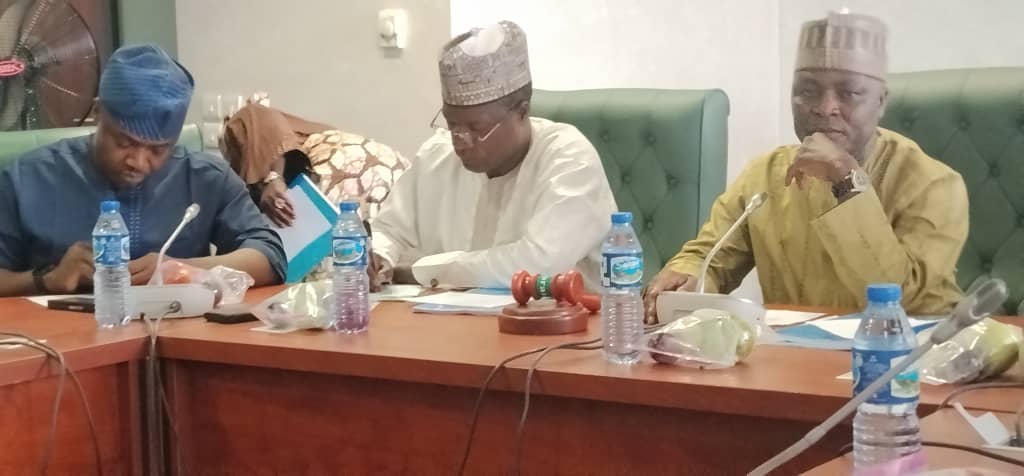
The Managing Director (MD) of the Corporation, Mr Sunday Thompson presented the proposed budget before the House Committee on Insurance and Actuarial Matters on Thursday.
Presenting the proposed budget details he said that, the NDIC proposed N589.89 billion as its estimated for 2026 which he said was N151.22 billion higher than in 2025.
He said, “The expenditure for 2026 projected is 250.458, 250.46, or 250.458, which is 19.65% of the budget, but that is taken from 50% of the cost-to-income ratio that we are allowed to spend.
“For capital operating expenses, our projection for 2026 is 199.04, which is 79.47 of the total budget. In terms of the capital expenditure, our projection for 2026 was 6.25 billion, which is 49.212 billion. The total expenditure, therefore, is 250.45 billion for 2026, which constitutes 50% of the total expenditure.
“The surplus we have, we projected for 2026, is 254.737 billion. 50% of that sum is 252.597 billion, which is 40.31, taking into cognizance the cost-to-income ratio. That is the projection we have for 2026”.
Earlier, the MD while giving an overview of the 2025 budget performance, he said that, the total budget for the year was N433.66 billion.
He said, “The annual budget was 433.66 rated to November 2025, we had 397.52 billion to date, 418, that’s as at November 2025, 418.65. Item to total, that was 99.99%. The variance was 21.132. So in terms of the level of budget implementation, we had 105.32%. That’s the pre-rated, while the actual was 96.54.
“Another source of income for us was the rental income.We projected 15.32 billion for 2025 annual budget. To November 2025, we had 14.044. The variance we had was 14.044. Performance was zero in terms of the level of implementation. Order income was 287.67 projected for 2025.
“Pre-rated till November 2025, 263.69. Year to date for November 2025, 51.48. The variance was 212.32. The level of budget implementation was 19.52, while the level of actual implementation was 17.89.
“So our total operating income for the year, the gross was 433.96. Pre-rated to November, 397.79. Year to date November, 418.70. And the level of budget implementation, actual or non-budget, was 17.89%.
“We also had a provision for funding gap, which we deduct from the gross income. It’s 17.89%. Total income, 96.48. In terms of the operating income, we had 97.47. Transfer to federal government CRF, we had 97.47. Expendable income limited to 50%, which is the cost to income ratio, we had 97.47% implementation. In terms of our operating expenses, employee benefit, we had 79.46. The total operating expenses, we had 63.83 as our level of budget implementation on actual budget.
“In terms of the total operating expenses, we had 63.83. That gave us a net surplus of 46.17. In terms of the annual budget, the pre-rated sum was 43.32. Year-to-date was 90.03. And in terms of the level of budget implementation, actual annual budget was 94.99%. So we transferred to the general reserve and had a percentage of 94.99 as our level of budget implementation. That is for the 2025 budget”.
In his remark after the presentation, Chairman of the Committee, Hon. Ahmed Jaha Babawo said, the media must have captured what is expected of NDIC to generate in 2026 and what they are expected to spend.
He said, “I want to put this on record before we move into executive session, that NDIC is one of the agencies that is involved in the fiscal responsibility act of cost to income ratio. Where 50% of their generation must be remitted to a dedicated consolidated federal government account.
“And the remaining 50% is going to be used for running the agency. And it may surprise members to hear that the budget implementation of 2025 is almost 97%. Meanwhile, we have 0% implementation, particularly on the capital components of other agencies, ministries and departments.
“This is just because NDIC is a self-generation agency, is one of the self-generation agencies or one of the government-owned enterprises, that generates their income and spends their income with the limitation of remitting a certain percentage based on the fiscal responsibility policy”.