National
Warri South Ijaw Community Leaders, Youths Reject Warri South Council Resolution, Cite Historical Records and Delta Laws


By Joseph Bienbo, Warri
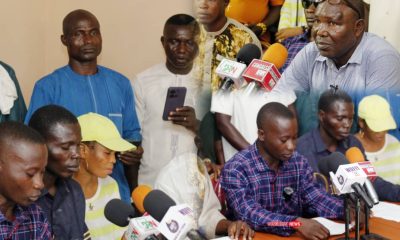
The Ijaw Youths and community leaders of Warri South Local Government Area have rejected a June 30, 2026 resolution by the Warri South Legislative Council which stated that “There are no indigenous Ijaw communities in Warri South LGA,” describing it as “legally invalid and historically inaccurate.”
In a press statement dated July 1, 2026, read and signed by community/youth leaders of several Ogbe-Ijoh communities in Warri South, they said the resolution misrepresents existing laws and records that recognize Ijaw presence in the LGA.
The youths/Community leaders argued that the 1999 Constitution of the Federal Republic of Nigeria, as amended, does not empower a local government legislature to determine the existence or non-existence of an ethnic nationality.
“Nowhere does the Constitution empower a Local Government Legislative Council to determine whether an ethnic nationality or tribe exists or does not exist. That function is reserved for the State House of Assembly and other competent authorities,” the statement said.
They noted that the Delta State House of Assembly has, through various laws, recognized the Ijaw as one of the three principal ethnic nationalities in Warri South LGA.
The youth leaders referenced the Delta State Traditional Rulers Law, which recognizes the Ogbe-Ijoh monarch, the Pere Amaokosu of Ogbe-Ijoh Warri Kingdom, as an autonomous traditional ruler within Warri metropolis.
They also cited the Chiefs Law of 1957 and the 1979 Bendel State Traditional Rulers and Chiefs Edict, stating that the laws have consistently recognized Ogbe-Ijoh’s autonomy in Warri South.
On administrative history, the youths said that when the first local structure was established in 1955 under the Western Region Laws of Nigeria No. 177 of 1955, Ijaw communities were included in the Warri Urban District Council alongside Urhobo and Itsekiri communities, with four electoral wards: Alders Town B3, Ogbe-Ijoh Ward C1, Ogbe-Ijoh Ward C2, and Government Area F1.
They also referenced past political representation, including the 1998 appointment of Hon. Saro Igangan as Supervisory Councillor for Agriculture in Warri South LGA to represent Ijaw interests, and her subsequent appointments to the Agbarha Community Development Commission in 2005 and 2009.
The Ogbe-Ijoh Warri South Community leaders/Youths accused the Chairman of Warri South LGA, Hon. Agbateyiniro Weyinmi Isaac, of driving the resolution to create ethnic tension. They called on Governor Sheriff Oborevwori and the Presidency to intervene to prevent a breakdown of peace in the LGA.
They also commended Councillors representing Okere Wards who, according to the youth, refused to support the resolution despite pressure.
The community leaders urged the Delta State Government and federal authorities to “call the Chairman to order” and to uphold existing laws and records on Ijaw status in Warri South.
“We stand united in our demand for justice, equity, and fair representation, and we will not be intimidated by rhetoric or tactics that seek to distort history,” the statement concluded.
Warri South LGA is home to Ijaw, Itsekiri, and Urhobo communities. Issues around historical claims, representation, and traditional rulership have periodically generated public debate in the area. Government and traditional leaders have often called for dialogue and peaceful coexistence among the groups.
The statement was signed by
Amb. Victor Akemotubo, President General, Ogbe-Ijoh Warri Kingdom Youth; Comrade Beriyaide Moses, Chairman, Olabrakonpre Community; Preye Dazi, Chairman, Loitiebiri Community; Ebikeneye Tikiri, Chairman, Ogbokone Community; Emomotimi Azebri, Chairman, Kemekedoume Community; Mr. Timi Kaskara, Chairman, Bulouama Community; and Jacob Gbokou, Chairman, Eweingbene Community.