National
NSE Kaduna: Engineers Must Lead, Not Follow Politics — Experts Demand Accountability in Infrastructure Delivery

By Abdullahi Alhassan, Kaduna
Nigerian engineers say the country is losing billions because projects are being decided by politics instead of need, and because government keeps building new things without maintaining old ones.
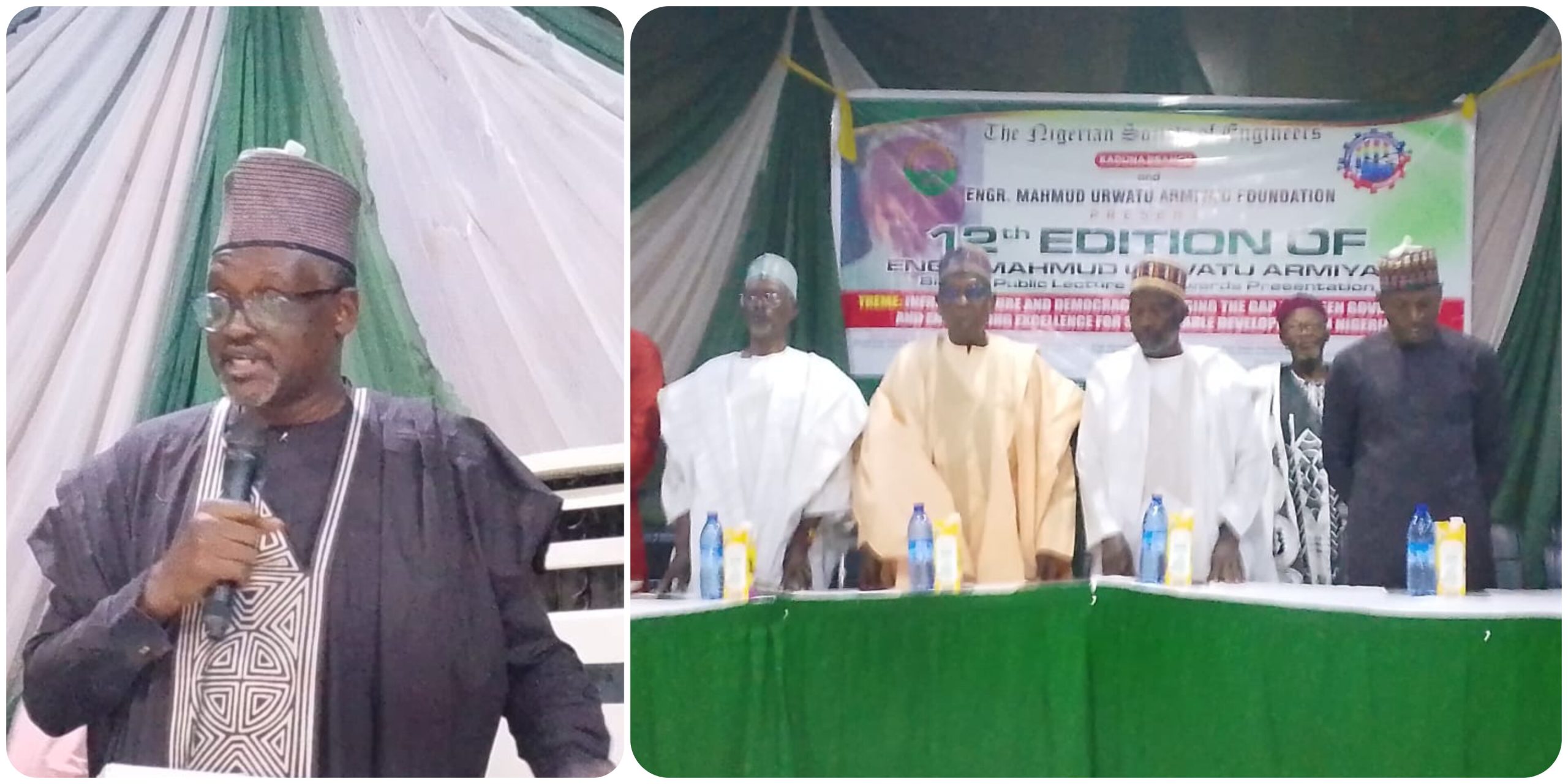
The concern was raised at the weekend in Kaduna at the 12th Engineer. Mahmud Urwatu Armaya’u Biennial Public Lecture and Awards, organised by the Nigerian Society of Engineers, NSE, Kaduna Branch, in partnership with the Armaya’u Foundation.
The central message was direct: if Nigeria wants infrastructure that works, engineers and professional bodies must be brought in before contracts are awarded, not after.
“Engineering input must start before procurement, not after political announcements,” keynote speaker Engr. Abdul Audu of Kaduna Polytechnic told the gathering. “Right now, we are often invited after politicians have already chosen what to build.”
Speaking on “Infrastructure and Democracy: Bridging the Gap Between Government and Engineering Excellence for Sustainable Development in Nigeria,” Audu said citizens should be getting light, good roads, clean water, functional schools and hospitals from democracy.
Instead, he said, many projects are imposed on communities without consultation. The result is abandoned sites and facilities that do not solve local problems.
He was particularly critical of constituency projects. In many cases, he argued, personal and financial interests drive the choice of project, not what communities actually need.
Audu also faulted the pattern of starting new projects while leaving old ones unfinished. He said successive administrations rarely check cost, feasibility or capacity before launching new schemes. “That is how we ended up with white elephants all over the country,” he said.
He backed his argument with data. Citing a World Bank 2025 review, Audu said Nigeria’s infrastructure stock is about 35 per cent of GDP, while the international benchmark is close to 70 per cent.
“It is not just about how much we spend,” he explained. “It is about how we select projects, how we procure them, how we execute, and whether we maintain them after delivery.”
On procurement, the engineer raised concerns about alleged manipulation of bidding and selective tendering. He said such practices kill transparency and deny government value for money.
His recommendation was clear: NSE and COREN must be involved from the planning and design stage. Professionals should test soil, assess terrain and choose the right construction method, instead of applying one design everywhere.
He cited the increasing use of rigid pavement on roads across different regions as an example. “A road in the North faces different soil and weather than a road in the South. Design must follow engineering, not politics,” Audu said.
To illustrate, he recalled leading a technical evaluation team to the Kaduna Refinery in 2017. That assignment, he said, showed why complex assets must be assessed by specialists, not political appointees.
Audu also stressed maintenance. Nigeria, he said, is quick to commission new projects but slow to budget for upkeep. As a result, existing roads and facilities collapse while new ones are being built.
He added that contractors are struggling too. With fuel subsidy removal and forex fluctuations, the cost of diesel and imported equipment has gone up. That is affecting timelines and budgets, making proper cost reviews and contract variations necessary.
Earlier in his welcome address, NSE Kaduna Chairman, Engr. Ibrahim Bello, said the Armaya’u Foundation was set up to promote engineering research, support talented but underprivileged students, and reward academic excellence. He appealed for support to build a permanent secretariat.
Chairman of the Board of Trustees, Engr. Abubakar Lawal Yar’adua, also known as Jakadan Katsina, lamented the collapse of refineries and textile industries. He urged young engineers to participate in politics to influence policy and governance.
The lecture ended with the presentation of awards to outstanding engineering students from universities and polytechnics. Organizers said the event was meant to deepen conversation on how professional engineering can strengthen democracy and deliver sustainable development.