Editorial
Niger Delta Resource Struggle: A Historic Debt to Our Fallen Heroes and Living Defenders – Mingo

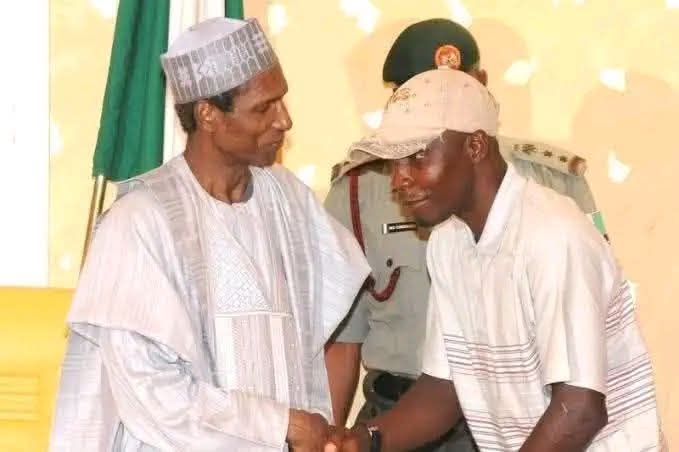
Niger Delta Youth leader Comrade Mingo Meshach Sayami Ogumaka has declared that, Niger Delta struggle for resource control, environmental justice, and true federalism in the Niger Delta did not emerge by chance, nor was it gifted by the Nigerian state. It was forced into national consciousness through decades of sacrifice, resistance, intellectual courage, and physical struggle by the sons and daughters of the Niger Delta.
At the forefront of this historic movement were late Chief Edwin Kiagbodo Clark (CON) of Kiagbodo, a towering voice of conscience; late His Royal Majesty Isaac A. Thikan, a custodian of tradition and defender of ancestral rights; and many other departed heroes whose names may not always appear in headlines but whose blood, sweat, and sacrifices shaped the destiny of the region. These leaders spoke truth to power at great personal cost, confronting oil multinationals and the Nigerian state over environmental devastation, economic exclusion, and political marginalisation.
He said, They were joined in purpose by other prominent Niger Delta icons, including late Major Isaac Jasper Adaka Boro, whose Twelve-Day Revolution ignited the modern struggle for self-determination; late Ken Saro-Wiwa, whose execution exposed Nigeria’s injustice to the world; late Chief Diepreye Solomon Peter Alamieyeseigha, whose defiance placed the Niger Delta firmly on the national agenda; and several other community leaders, traditional rulers, activists, and freedom fighters who refused to accept a future of poverty amid plenty.
The youth leader mingo revealed that the agitation for resource control was never an ethnic project. It was a regional survival struggle a collective demand by Ijaw, Itsekiri, Urhobo, Isoko, Ogoni, Ibibio, Efik, Ibeno, Ilaje, and other ethnic nationalities of the Niger Delta who share the same polluted rivers, devastated farmlands, and neglected communities.
Today, the vision of these fallen heroes is being sustained and defended by strategic leaders and institutions within the region. Notably, High Chief Government Oweizide Ekpomupolo (Tompolo) has remained central to stabilising the oil-producing region through peace-building, security engagement, and economic intervention. His role in safeguarding national assets through pipeline surveillance and regional security has not only reduced oil theft but has reinforced the principle that those who suffer the consequences of resource extraction must be part of its protection and management.
It is in response to the unrelenting agitation of these leaders that the Federal Government established intervention frameworks such as the Nigerian National Petroleum Company Limited (NNPC), the Ministry of Niger Delta Affairs, the Niger Delta Development Commission (NDDC), the Presidential Amnesty Programme, oil pipeline surveillance security arrangements, and the constitutional provision of 13% derivation for oil-producing states.
These structures were not acts of charity. They were concessions wrested from the Nigerian state by pressure, sacrifice, and resistance. They exist because the Niger Delta refused to remain silent while its wealth developed other regions and left its own people in poverty.
Crucially, these intervention agencies and policies are meant to serve the entire Niger Delta region, not the Ijaw nation alone. They are regional instruments designed to address infrastructural decay, youth unemployment, environmental remediation, and economic inclusion across all Niger Delta ethnic nationalities.
The truth must be stated clearly: without the sacrifices of the past heroes, there would be no NDDC, no Amnesty Programme, no Ministry of Niger Delta Affairs, no pipeline surveillance opportunities, and no meaningful derivation for oil-producing states. The relative peace and economic stability enjoyed today are built on the graves, imprisonments, exile, and persecution of Niger Delta patriots.
The Niger Delta therefore owes its fallen heroes more than ceremonial praise. It owes them vigilance, unity, accountability, and the protection of the ideals for which they fought. Their struggle was genuine, their sacrifices priceless, and their legacy non-negotiable.
To forget them is to betray the region.
To honour them is to defend the Niger Delta today and always