National
Ijaws Accept Presidency, INEC Intervention on Warri Delineation, Seek Lasting Peace — Gbenekama

By Chukwunonso Eric, Warri.
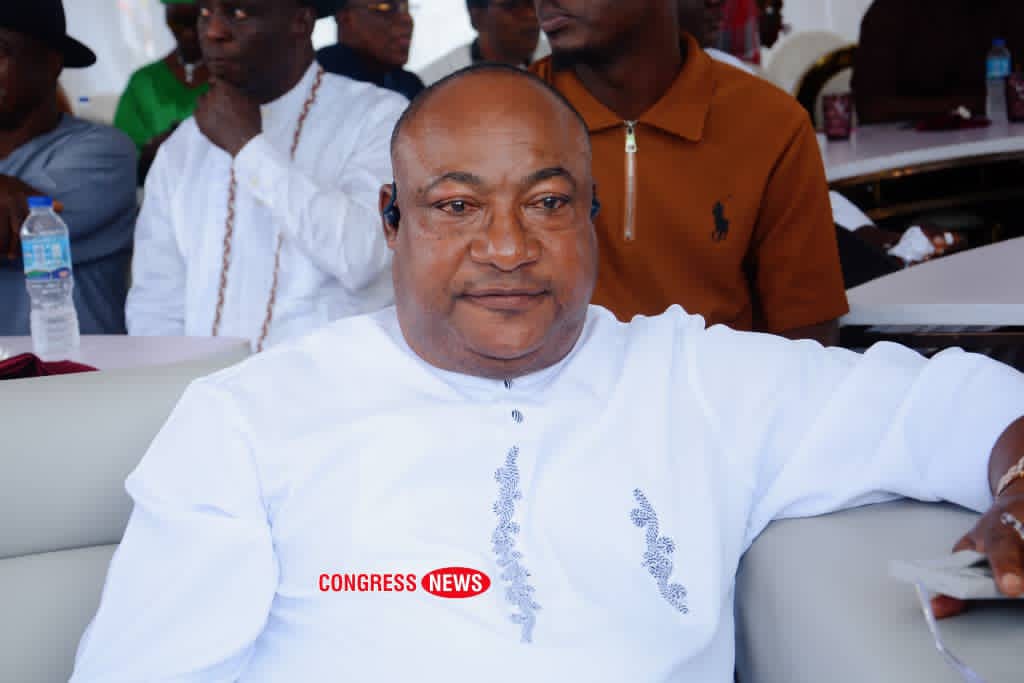
Warri, Delta State — The Fiyewei (Spokesman) of Gbaramatu Kingdom, High Chief (Amb.) Godspower Gbenekama, has declared that the Ijaw people of the Warri Federal Constituency have accepted the intervention of the Presidency, the Office of the National Security Adviser (NSA), and the Independent National Electoral Commission (INEC) on the implementation of the Supreme Court-ordered fresh ward delineation in the area.
Speaking during a press briefing at his country home in Warri on Saturday, Gbenekama said the decision was taken in the interest of peace, stressing that the Ijaw people were no longer interested in conflicts with their neighbours, particularly the Itsekiri ethnic nationality.
According to him, the Presidency convened a high-level meeting following the temporary shutdown of Chevron flow stations by some Ijaw youths, during which President Bola Ahmed Tinubu proposed a political arrangement aimed at fostering peaceful coexistence among the ethnic groups in Warri.
Gbenekama disclosed that the President suggested an 11–9 ward sharing formula in Warri South-West between the Ijaws and Itsekiris, while Warri North would have an equal 10–10 ward distribution. He added that the President did not recommend any changes to the existing arrangement in Warri South but encouraged a power-sharing system to ensure inclusiveness in political appointments and elective positions.
He further revealed that the arrangement also led to the creation of two additional federal constituencies, subject to ratification by the National Assembly, while the number of state constituencies increased from three to six. According to him, the new structure guarantees representation for both Ijaws and Itsekiris in Warri South-West and Warri North, while promoting equitable political understanding in Warri South.
The Gbaramatu spokesman commended INEC for implementing the delineation exercise, noting that the process had already been concluded, uploaded by the electoral commission, and used for party primaries ahead of future elections.
He maintained that any party dissatisfied with the outcome should embrace dialogue rather than confrontation, describing the interventions by the Presidency and the National Security Adviser as fair and capable of sustaining peace in the oil-rich region.
Reaffirming the commitment of the Ijaw nation to peaceful coexistence, Gbenekama declared that the era of violent conflicts in Warri had ended, assuring that no Ijaw person would attack any Itsekiri community or engage in acts capable of reigniting hostilities.
He therefore appealed to the Ijaw, Itsekiri and Urhobo ethnic nationalities to put aside their differences and unite in addressing the developmental challenges confronting the region.
Gbenekama lamented the level of underdevelopment in the Niger Delta despite the enormous contribution of the three ethnic groups to Nigeria’s economy through oil and gas production. He urged political leaders and stakeholders to prioritize meaningful development over political patronage, insisting that collective action was necessary to attract greater federal attention and improve the living conditions of the people.
He concluded by calling on all stakeholders to embrace peace, dialogue, and cooperation as the only sustainable path toward lasting stability and development in the Warri Federal Constituency and the wider Niger Delta region.