National
Nigeria, UK Deepen Defence Partnership Against Security Threats

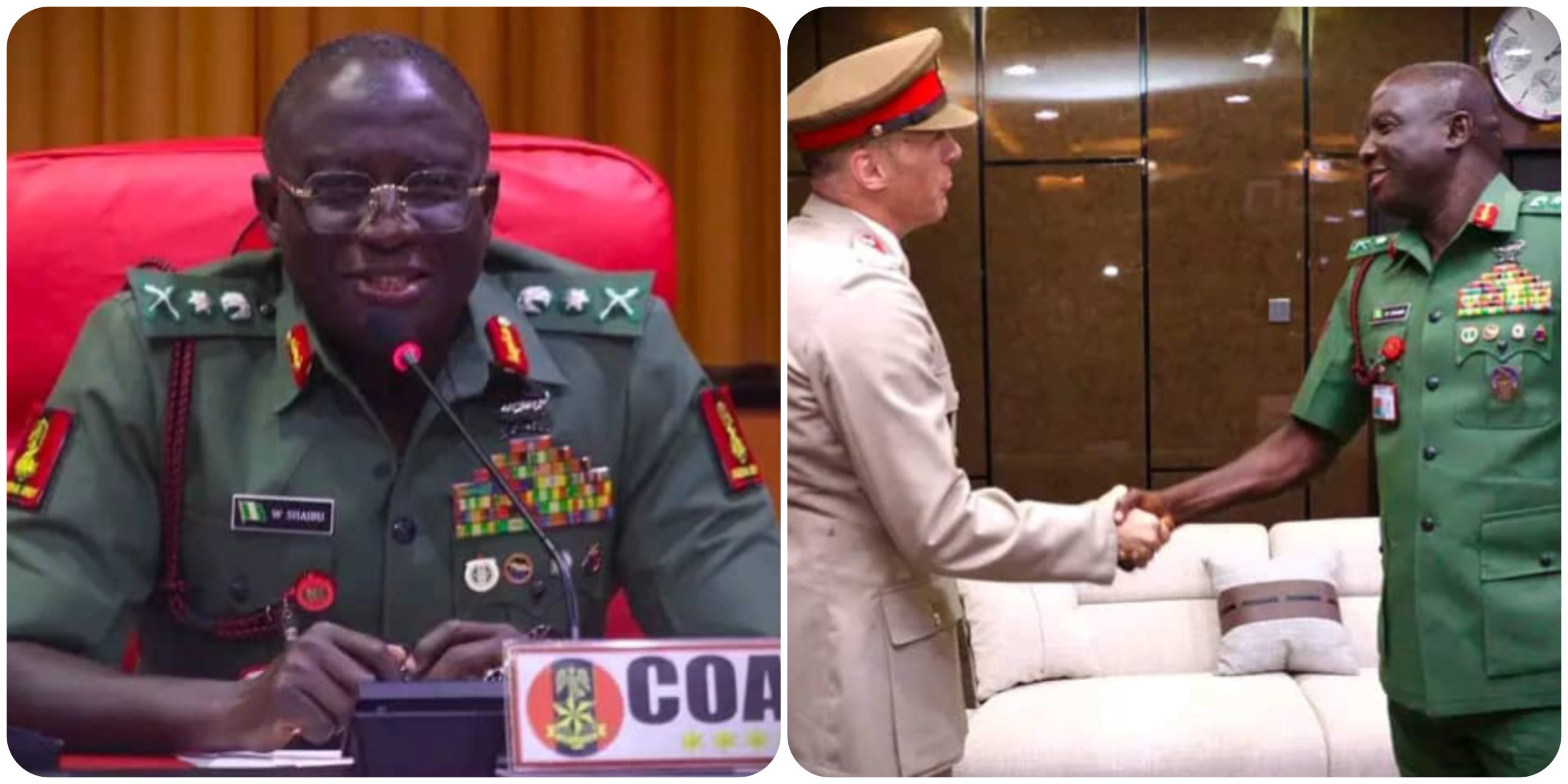
By Babangida Abdullahi Gusau
The Nigerian Army and the United Kingdom have agreed to deepen defence cooperation to strengthen Nigeria’s capacity to tackle evolving national and regional security threats.
Chief of Army Staff (COAS), Lt.-Gen. Waidi Shaibu, stated this on Tuesday in Abuja when he received the British Defence Adviser to Nigeria, Brig.-Gen. Tom Harper, on a courtesy visit to Army Headquarters.
Shaibu said sustained cooperation with international partners remained critical to building a more adaptable, combat-ready and resilient Nigerian Army.
He identified intelligence, surveillance and reconnaissance, aviation capability, specialised training, force protection and technology integration as key areas requiring stronger collaboration.
The Army chief said asymmetric warfare and operations in difficult terrain, particularly in the Northeast, remained major operational challenges.
He called for enhanced intelligence and round-the-clock situational awareness down to battalion level to improve the Army’s ability to respond to emerging threats.
Shaibu also said the expansion of the Nigerian Army from eight to 12 divisions would require corresponding investments in advanced training, instructor development and Special Forces capabilities.
He particularly highlighted the need to strengthen training at the Doma facility and institutionalize lessons learnt from past military operations.
The COAS further disclosed efforts to preserve military heritage through the integration of historic campaigns, including the Longest Advance, into command curricula and the digitization of military archives.
Responding, Harper reaffirmed Britain’s commitment to supporting Nigeria under the Security and Defence Partnership (SDP).
He said the UK planned to expand regional train-the-trainer programmes covering combat tactical drills, casualty care and advanced patrolling.
According to him, future Operation HADIN KAI training cohorts are expected to include military personnel from Niger, Cameroon and Chad alongside Nigerian troops.
He said the initiative would improve interoperability and strengthen the collective capacity of countries in the region to confront shared security threats.
Harper also disclosed proposed UK support for the establishment of a reference Forward Operating Base within a cantonment environment, as well as the provision of counter-unmanned aerial systems and expanded tactical intelligence, surveillance and reconnaissance capabilities to brigade level.
The discussions also covered defence procurement and capability development, including air defence systems, possible transfers of protected mobility vehicles and specialised ammunition support.
The Army said the engagements reflected the broader objective of equipping its personnel with the capabilities required to anticipate, deter and effectively respond to emerging security threats.