National
Former University Professor Arrested After Blocking a Food Delivery Robot in Protest Against Threats to Human Jobs

By Micheal Chukwuebuka
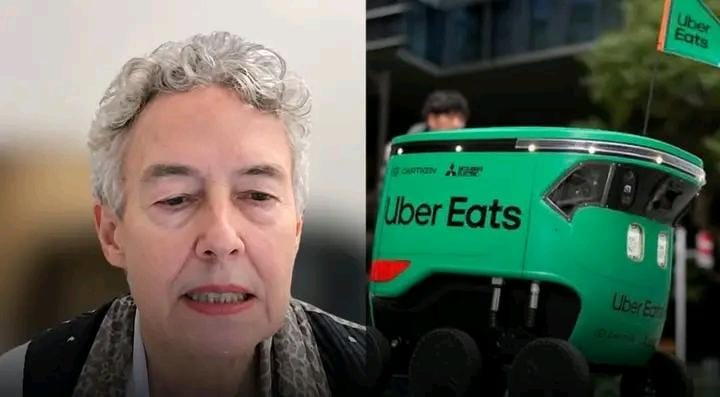
A 78-year-old retired University of Pennsylvania professor, Carolyn Marvin, has been arrested for allegedly blocking an Uber Eats delivery robot in Philadelphia, United States, as part of her protest against machines replacing human workers.
Marvin was reportedly taken into custody on Wednesday after refusing to move from the autonomous robot’s path despite police repeatedly asking her to let it pass, according to Philly Voice.
She was subsequently charged with disorderly conduct.
The former professor, who taught a course on freedom of expression at Penn, said she had been confronting delivery robots for months because she believes companies are deploying them at the expense of human workers to “enrich their own bottom line.”
“I know they’re taking the jobs of human delivery workers and, so, I have been protesting them whenever I saw them by standing in front of them and preventing them from going forward,” she said.
Marvin maintained that her arrest would not end her campaign, insisting that she intends to challenge the charge.
“I think it’s my First Amendment right to publicly demonstrate on a sidewalk to protest against delivery robots,” she told WPVI-TV.
Explaining her motivation, she added, “I’m exercising the rights of my citizenship, so I think of it in those terms.”
Her protest has also triggered mixed reactions online, with some social media users praising her for standing up for workers, while others criticised her actions.
“Some heroines don’t wear capes,” one supporter wrote, while another argued that she should have destroyed the robot.
However, critics questioned her approach, with one user warning that obstructing a robot delivering medicine to people could constitute a crime. Another dismissively labelled her a “Robotic Karen.”
Despite the criticism and arrest, Marvin says she plans to continue confronting the machines whenever she encounters them, hoping to spark a wider conversation about the future of human employment as automation expands.