National
Warri Delineation: Ijaw, Urhobo Leaders Warn Against Further Alterations of Report, Accept Tinubu’s Intervention Under Condition

By Joseph Bienbo, Warri
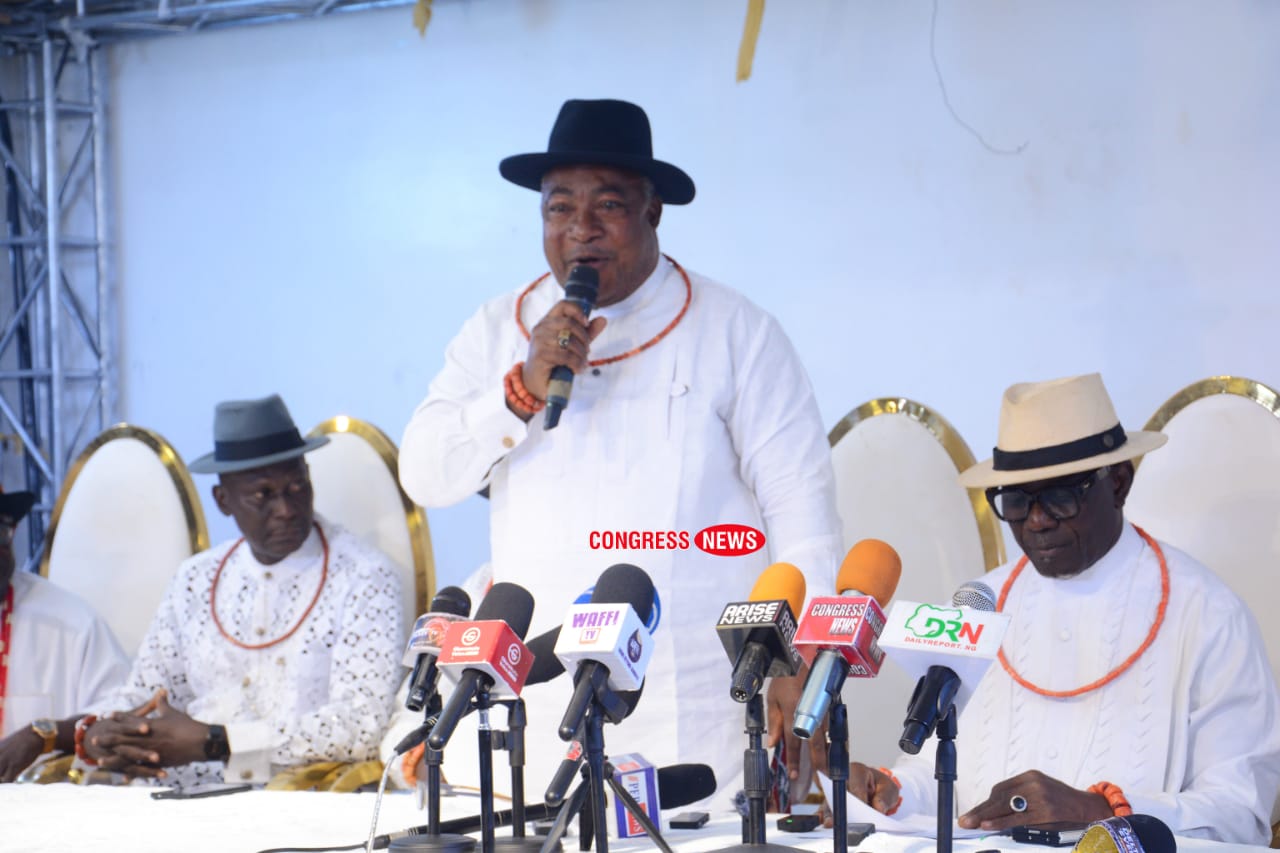
Leaders of the indigenous Ijaw and Urhobo ethnic nationalities in the Warri Federal Constituency of Delta State have expressed conditional acceptance of President Bola Ahmed Tinubu’s intervention in the contentious ward delineation exercise carried out by the Independent National Electoral Commission (INEC), while strongly warning against any further alterations to the commission’s May 20, 2026 report.
The position was made known during a joint press briefing held on Sunday in Warri following a high-level stakeholders’ meeting convened by President Tinubu at the Presidential Villa, Abuja, on June 11, 2026, to address tensions arising from the implementation of the Supreme Court-ordered fresh delineation of electoral wards and polling units in the Warri Federal Constituency.
The leaders recalled that INEC had, on May 20, released the report of the fresh delineation exercise, creating 20 Registration Areas/Electoral Wards across Warri North, Warri South and Warri South-West Local Government Areas. The commission also approved additional State House of Assembly constituencies for Warri North and Warri South-West and proposed the creation of a new Warri Federal Constituency II to cover both local government areas, while Warri South would constitute Warri Federal Constituency 1.
According to the Ijaw and Urhobo leaders, the report was widely welcomed by stakeholders and was accepted by their ethnic groups as a fair reflection of demographic realities in the area.
However, the implementation of the report was reportedly suspended following a presidential directive, a development that triggered widespread agitation among the Ijaw and Urhobo populations. The protests included peaceful demonstrations by women, youths and community leaders, as well as the occupation of oil and gas facilities and the temporary blockade of the Escravos River.
The protests ultimately drew the attention of President Tinubu, who, in consultation with Delta State Governor, Rt. Hon. Sheriff Oborevwori, convened an emergency meeting involving leaders of the Ijaw, Itsekiri and Urhobo ethnic nationalities.
The meeting was attended by President Tinubu, Governor Oborevwori, National Security Adviser Malam Nuhu Ribadu, the Director-General of the Department of State Services, senior presidential aides and representatives of INEC.
At the meeting, President Tinubu reportedly appealed to the three ethnic groups to embrace peace, coexistence and compromise in the interest of stability and development in the Warri Federal Constituency.
The President informed stakeholders that consultations with the Delta State Government and relevant federal agencies identified concerns regarding the composition of electoral wards in Warri South-West Local Government Area. Consequently, he proposed a modification of the delineation report to reflect a ratio of 11 wards for the Ijaw areas and nine wards for the Itsekiri areas in the council.
The leaders disclosed that the delineation arrangements for Warri North and Warri South Local Government Areas were not discussed and remained unchanged.
President Tinubu also directed stakeholders to develop a Memorandum of Understanding (MoU) on power-sharing and political rotation among the three ethnic nationalities. To facilitate the process, the National Security Adviser was mandated to work with representatives of the Ijaw, Itsekiri and Urhobo groups to draft the agreement.
Following the presidential directive, representatives of the three ethnic groups met with the National Security Adviser in Abuja on June 12, where discussions commenced on the proposed power-sharing arrangement.
According to the Ijaw and Urhobo leaders, their delegation proposed a comprehensive framework that would cover the rotation of the House of Representatives seats in both Warri Federal Constituency 1 and the proposed Warri Federal Constituency 11, as well as the chairmanship positions of Warri North, Warri South and Warri South-West Local Government Areas and commissioner appointments.
However, they alleged that the Itsekiri delegation opposed the inclusion of several aspects of the proposal, arguing that the President’s directive applied only to the proposed Warri Federal Constituency 11 and not to existing federal constituencies or state-level political appointments.
The Ijaw and Urhobo leaders described the stance of the Itsekiri delegation as an attempt to frustrate the implementation of the President’s broader peace initiative and the signing of a comprehensive Memorandum of Understanding.
Despite their reservations, they stated that, on the advice of the National Security Adviser and out of respect for President Tinubu, they agreed to sign an MoU limited to areas where consensus was reached, particularly regarding the proposed Warri Federal Constituency 11, in order to facilitate the completion of the delineation process ahead of the 2027 general elections.
The leaders emphasized that their acceptance of the President’s intervention concerning ward allocation in Warri South-West should not be interpreted as satisfaction with the outcome.
They argued that INEC’s original field report had recommended 14 wards for Ijaw communities and only four for Itsekiri communities in Warri South-West, reflecting what they described as the demographic and geographical realities of the area. They claimed that political interventions eventually increased the number of Itsekiri wards to nine.
Similarly, they noted that in Warri North Local Government Area, the number of wards allocated to Itsekiri communities rose from eight in the original field report to ten following political negotiations.
According to the leaders, these adjustments resulted in a reduction of Ijaw wards across the three Warri local government areas from 27 to 24, while Itsekiri wards increased from 21 to 27.
They maintained that the changes amounted to an injustice against both the Ijaw and Urhobo peoples.
The Ijaw and Urhobo leaders therefore declared that they had reluctantly accepted the President’s intervention in the interest of peace and national unity but would resist any further modifications to the delineation report presented by INEC on May 20, 2026.
They called on INEC to immediately upload the delineation report and newly created polling units to its official portal and commence voter registration and transfer exercises in the affected areas.
The leaders further warned that any additional delay in implementing the report or any attempt to introduce further alterations could undermine confidence in the process and heighten tensions within the constituency.
The statement was jointly endorsed by prominent Ijaw and Urhobo leaders, including Chief Godspower Gbenekama, Olorogun Victor Okumagba, Chief Denbo-Denbofa Oweikporodor, Chief John Eranvor, Chief Arthur Akpodubakaye, Chief David Reje, Hon. Samuel Ako and Chief Okumagba Sylvester Femi.
Copies of the statement were forwarded to President Bola Ahmed Tinubu, Delta State Governor Sheriff Oborevwori, National Security Adviser Nuhu Ribadu, the Director-General of the Department of State Services and the Chairman of INEC for their attention and necessary action.