National
BREAKING: Edo Ijaw 5 Kingdoms Converge, Accuse Edo Govt, Oba Palace of Balkanization, Deprivation, Strangulation

By Joseph Bienbo, Warri
Leaders of Egbema, Olodiama, Okomu, Gbaraun and Furupagha Kingdoms, comprising over 500 Ijaw communities in the five Ijaw kingdoms balkanized into Ovia South-West, Ovia North-East and Ikpoba-Okha LGAs of Edo State, have raised alarm over what they described as persistent deprivation, balkanization and threat to peaceful coexistence by the Edo State Government in connivance with the Palace of the Oba of Benin.
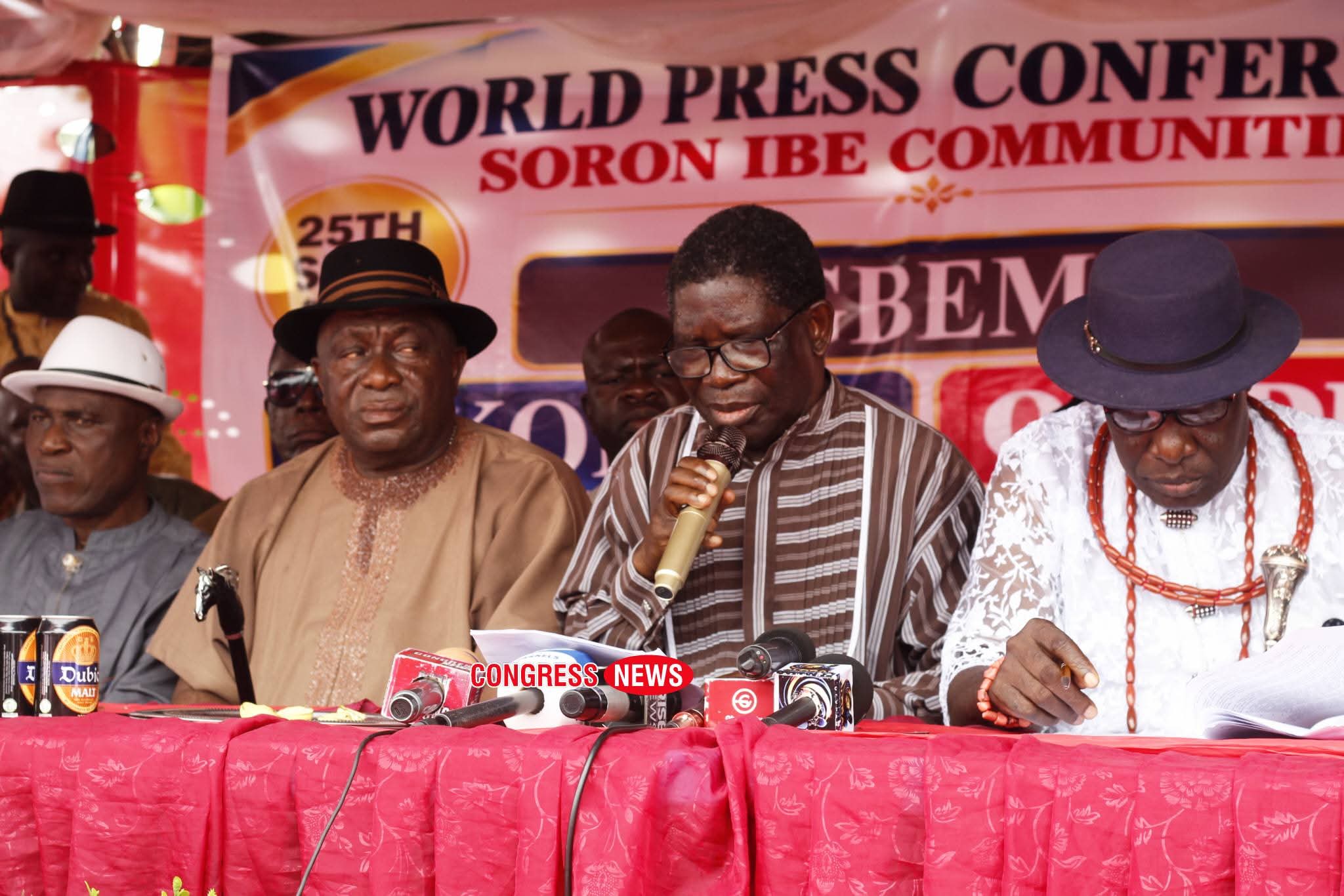
In a World Press Conference held on behalf of Traditional Rulers, Chiefs, Amaokosuowei and people of the kingdoms, the Ijaw leaders said recent social and conventional media have been awash with “various inflammatory, libelous, defamatory and repulsive posts” against them by neighbours of Bini extraction, using labels like “captives, settlers, slaves, tenants” during public hearings on state creation.
They alleged that Hon. Mosedi Igbinedion, Hon. Murphy Osaro Omoruyi and Hon. Esosa Iyawe conspired to move a motion in the House of Representatives rejecting the creation of Toru-Ibe State or ceding any part of Edo State, while groups like Aiguobasimwin Movement, Otedo Youths and Benin Solidarity Movement issued “malicious publications threatening wars and violence” against the Ijaw.
The kingdoms also accused Otedo Youths and other groups of threatening the existence of Ijaw autochthons, and faulted a motion moved by Hon. Billy Osawaru which they said deliberately misinterpreted a statement by His Majesty Asari Dokubo, the Amayanabo of Elem Kalabari. They said Dokubo’s statement was “a general statement about the struggle for the liberation of the Ijaws of Edo State from the deprivation, marginalization, oppression and Subjugation” and not a threat of war.
Adopting Dokubo’s position as “a true reflection of the current reality of the modern day slavery, marginalization, oppression, subjugation, balkanization and fragmentation of the Ijaws of Edo State,” the leaders declared: “History is not only written in Palaces, and Courts but also written in waters, in the creeks and in the cadence of the oldest tongues.”
On identity, they asserted: “Edo State today is not the inheritance of one people. It is a federation of indigenous nations – Bini, Ijaw, Esan, Etsako, Usen, Owan, Igbanke and Akoko-Edo etc- none of whom were borrowed, captured as slaves, or annexed as tenants.” They stressed that Ijaws are aboriginal people with kingdoms and genealogies that predate the 1991 military fiat that created Edo, Delta and Ondo States.
Tracing historical context, the press conference cited Chief Dr. Jacob U. Egharevba, of royal blood and first curator of the Bini Museum, who wrote: “Tradition says that they met some people who were in the land before their arrival,” noting that “The ‘people who were in this land before their arrival’ were the Ijaws, the most ancient people in Nigeria.” They also cited a ferry encounter at Ovia River, stating “Obviously, the Ferryman was not Bini but an Ijaw man, the last ferry man was Pa. Awowo from Ikoro in Olodiama kingdom.”
They further referenced Yoruba author E. Alademomi Kenyo who documented that “Up till that time the Oba of Bini and his people were pure Yoruba and did not understand the language of the Aborigines,” and pointed to pre-colonial trade ties, noting that Egbema and Olodiama kingdoms hosted four harbours – Binidodogha (Boedoe), Arbor, Uloli (Ulogi) and Gelegelegbene – during Portuguese trade from the 14th to 17th centuries.
To prove long-standing recognition, they listed correspondences including a 1966 letter from Iyekovia District Council to the Agadagba of Egbema on tax collection, a 1985 directive placing Gbaramatu and Egbema clans under Warri LGA, and the installation of Pere Ubula Oyighan as Agadagba in 1955 published in Daily Times. They also cited independent institutions: “a Baptist church branch at Ikoro Town, Olodiama (1887), ten years before the infamous invasion of Bini in 1897; Gbelebu Primary School (1904); Ofunama airstrip built for Shell-BP’s first oil exploration (1957)” and forest reserves, native courts and oil exploration at Gelegele field (OML 96).
The kingdoms said the problem started in 1988 when “Oba Erediawa II, Oba of Benin is the Oba who tried to do what his predecessors did not do” by attempting to create Enogie (Dukedom) titles over riverine Ijaw communities and installing his brother Prince Uyiekpen Akenzua as Obayantor. The move, they said, was fiercely resisted, prompting then Sole Administrator Col. J. Tunde Ogbeha to mediate and conclude that “the Binis and the Ijaws were like two parallel lines, which do not meet and therefore it would serve no good purpose trying to impose the Enogies.”
They accused the Bini palace of frustrating their development, recalling that Prof. Ambrose Alli proposed 56 LGAs for Bendel State, including two for Ijaws, but was opposed under the mantra “DONT DIVIDE MY KINGDOM,” which they said limited Edo to 18 LGAs despite its land mass, while Delta got 25. They also cited a May 2001 motion by Majority Leader Matthew Iduoriyekemwen “to change all Ijaw Communities names in Edo State to Bini names” as reported by Vanguard.
On the Gelegelegbene dispute, they clarified that Suit No. SC 131/1982 between John Ikinbor Dweye and Joseph I. Iyomaham was “purely for TRESPASS on the said parcel of farmland in favour of Mr. Joseph I. Iyomaham” and “was not a case between Gelegelegbene and Ughoton Communities” nor between Ijaws and Binis. They stressed that the Supreme Court, where Justice Otutu Obaseki, a Bini man, read the lead judgment, declared that “the inhabitants of Gelegelegbene as well as Ughoton are occupiers of their respective lands within the meaning of Section 50 of the Land Use Decree, 1978.”
The leaders anchored their demand for Local Government Development Centres on the 1988-1989 Constituent Assembly Report which at page 492 stated: “The Ijaw people in Ovia Local Government deserve a Local Government Area,” citing reasons such as riverine location, inaccessibility, denial of development and rich natural resources. They noted that the report recommended Toru-Ibe LGA but “for the opposition of the Bini Palace, which led to the non-inclusion of Toru-Ibe,” Ovia North-East was created with headquarters at Okada, forcing Ijaws to travel 2-3 days to access LGAs.
Giving population figures to justify viability, they said the 1963 census put Olodiama Clan at 28,479, Egbema at 52,579, and Gbaran, Okomu and Furupagha at 28,047, while 1952 census recorded 87,674 Ijaws in Iyekuselu and Iyekovia, with a tax-paying population of over 17,000. “The projected population now stands at over one million,” they said, warning that continued actions constitute “existential threat to the people” and that “For Binis who are aqua phobic to lay claim to aboriginal coastal dwellers speaks volume.”