National
Kaduna Begins Embedding Empathy in Public Service Through SPRiNG Trauma Training

By Abdullahi Alhassan, Kaduna
Kaduna State is retraining the people who serve citizens daily to respond to pain with care, not just process paperwork.
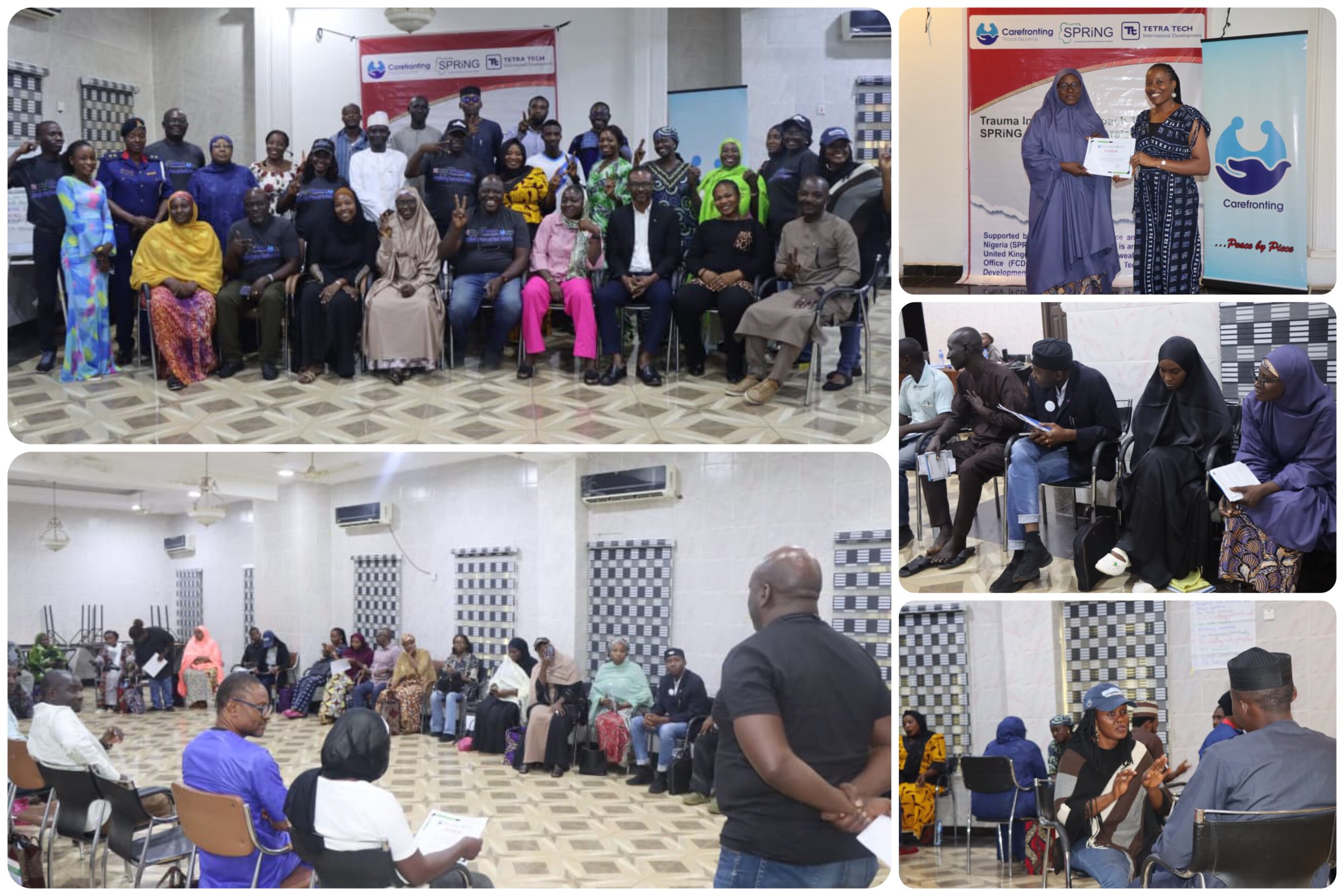
This week, Carefronting Nigeria under the SPRiNG programme held a 2-day Trauma-Informed Approach training in Kaduna. The aim: ensure that women, girls and other vulnerable residents who seek help from government are not re-traumatized in the process.
The training brought together the Nigerian Security and Civil Defence Corps, NSCDC, the Kaduna State Multi-Door Court House, the Ministries of Women Affairs and Youth Development, Civil Society Organizations, and community and traditional leaders.
SPRiNG is focused on strengthening systems that protect and support vulnerable populations across the state.
Putting People Before Procedure
Facilitators guided participants through six practical areas: understanding the impact of trauma, recognizing trauma responses, applying trauma-informed principles, creating safe and supportive environments, preventing re-traumatization, and strengthening self-care and community resilience.
Ms. Tessy Gusim, Senior Programme Manager, Carefronting Nigeria, said the training was about changing institutional culture.
“Trauma is not limited to war zones — it permeates our communities, institutions, and daily interactions,” Gusim said. “Someone who comes to a ministry or security agency may be carrying grief, violence or displacement. If we meet them with harshness, we worsen their situation.”
She said the goal is to build “trauma literacy” across MDAs — in the words staff use, the spaces they create, and the way they deliver services.
A Unified Approach Across Sectors
Organizers said trauma and mental health cut across security, justice, health and social welfare, so the training intentionally mixed participants from different backgrounds.
An NSCDC officer worked alongside a court mediator. A ministry official developed case responses with a CSO advocate and a community leader.
“The SPRiNG programme is driving one government response,” Gusim noted. “A response centered on safety, dignity and recovery.”
A participant from the Ministry of Women Affairs called the session “necessary,” saying most of their clients are survivors who need support.
An NSCDC officer said the training would change how personnel engage victims in the field. “Our tone and actions can either help someone heal or push them away,” he said.
More Trainings to Follow
Carefronting Nigeria said the Kaduna training is the first in a series planned under SPRiNG to embed trauma-informed practices statewide.
“The SPRiNG programme and Carefronting Nigeria remain committed to expanding trauma-informed practices across Kaduna State and beyond,” the organization stated.
Stakeholders said the approach will improve mental health awareness, strengthen access to justice, and make public services more compassionate — especially for women and children most affected by violence.
Participants agreed on the core lesson: shift from asking “What is wrong with you?” to “What happened to you?” That, they said, is how healing-centered governance begins.