National
Anti-Corruption Enforcement Must Get to The Grassroots — EFCC Assures Local Govt. Chairmen


By Micheal Chukwuebuka
The Economic and Financial Crimes Commission (EFCC) assures local government council chairmen and chairmen of traditional rulers’ councils across the country that anti-corruption enforcement would penetrate the grassroots in order to make development closer to the people.
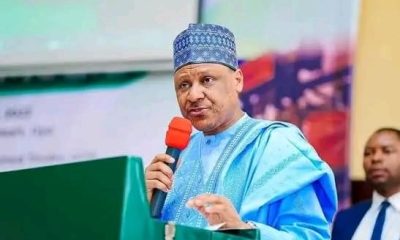
The Chairman of the Commission Ola Olukoyode stated this in Abuja at the maiden Annual National Conference of Local Government Council Chairmen and Traditional Rulers Councils.
According to him, the Commission’s commitment to accountability does not stop at the federal level, pledging closer attention to transparency at the sub-national tier as well.
He notes that as more resources flow to local governments, the real measure of success will be whether that funding translates into tangible improvements in the everyday lives of grassroots communities.
He points that the EFCC’s work supports every pillar of President Bola Ahmed Tinubu’s Renewed Hope Agenda.
Olukoyede recalls that between October 2023 and the period covered by the Commission’s recent stewardship account, the EFCC recorded recoveries exceeding ₦1.233 trillion, alongside about $684.48 million, £373,905.78 and €9.34 million in other currencies.
He reveals that roughly two-thirds of the naira recovered was returned to ministries, departments and agencies, state revenue services, companies and individuals, with federal and state tax recoveries alone totalling about ₦288.1 billion.
He stresses that recovery should not end with seizure, noting that approximately ₦661.32 billion and $492.37 million had been released to beneficiaries during the period under review, including individuals, companies, government institutions and revenue authorities.
Olukoyede links Nigeria’s exit from the Financial Action Task Force grey list in October 2025 to sustained inter-agency reforms in which the EFCC played a central role, noting that President Bola Ahmed Tinubu has said that the vision and focus of his administration were about shortening the distance between government and the governed, widening access to services and creating more centres of local development.