National
One-party Dominance: Nigeria Democracy In The Shadows, By Engr. Yeigagha Henry, JP

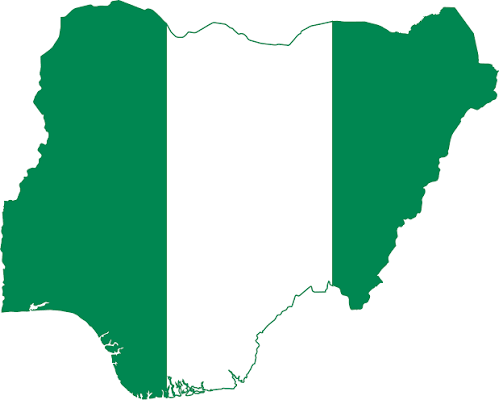
“Defections, institutional weakness, perceived witch-hunts, money-driven politics, and a faltering opposition are pushing Nigeria’s democracy toward a dangerous tipping point”
Nigeria’s political atmosphere today is not just blurred; it is undergoing a deep structural transformation that raises urgent questions about the survival of competitive democracy. Beneath the surface of constitutional multipartyism lies a system increasingly defined by dominance, defections, weak opposition, declining public confidence, and growing concerns about institutional neutrality.
This is not merely a political phase. It is a defining moment in Nigeria’s democratic journey.
THE STRUCTURE OF NIGERIA’S POLITICAL SYSTEM
Nigeria operates a presidential system modeled after the United States, with a clear separation of powers among the executive, legislature, and judiciary. Constitutionally, it is a multi-party democracy, with the Independent National Electoral Commission (INEC) overseeing elections.
However, beyond this formal structure lies a political reality shaped by patronage networks, elite bargaining, and regional power blocs. Elections are often less about ideology and more about influence, alliances, and access to state resources.
This foundational weakness has made Nigeria’s democracy vulnerable to distortion.
THE RISE OF APC AND THE CONSOLIDATION OF POWER
Since 2015, the All Progressives Congress (APC) has evolved into a dominant political force. Under President Bola Ahmed Tinubu, the party has further consolidated its influence across federal and state structures.
This dominance has been reinforced by a steady stream of defections, giving the ruling party a commanding advantage in governance and electoral positioning.
THE DEFECTION WAVE: A SYSTEM IN MOTION OR IN CRISIS?
The current wave of defections remains one of the most defining features of Nigeria’s political climate.
Political actors are crossing party lines at an unprecedented rate, often without ideological justification. Strongholds are collapsing, and opposition structures are thinning out.
With this sustained wave of defections, Nigeria’s political system is not just shifting; it is showing signs of crashing under the weight of opportunism and imbalance.
PDP: A POLITICAL GIANT AMPUTATED
The Peoples Democratic Party (PDP), once the dominant political force in Nigeria, has been effectively amputated by the mass defection of its key members and power blocs.
This steady erosion has weakened its national spread, fractured its internal cohesion, and diminished its ability to function as a credible alternative. What remains is a party struggling not just for relevance, but for structural survival.
The implication is profound: when a major opposition platform is hollowed out, the entire democratic ecosystem suffers.
EMERGING COALITIONS UNDER PRESSURE: THE ADC QUESTION
Amid the weakening of traditional opposition platforms, the African Democratic Congress (ADC) has increasingly been viewed as a potential coalition force and rallying point for alternative political alignment.
However, there are growing concerns that this emerging platform is being threatened by entrenched political gladiators, with deliberate efforts aimed at frustrating members and fast-tracking its extinction before it can fully consolidate.
These pressures: whether through inducement, internal destabilization, or political intimidation raise serious concerns about the shrinking space for opposition growth and coalition building in Nigeria.
THE QUESTION OF WITCH-HUNT: REALITY OR POLITICAL PERCEPTION?
Allegations of selective targeting of opposition figures, whether real or perceived, have further complicated Nigeria’s democratic space.
There is a growing narrative that the ruling party is deploying the full arsenal at its disposal: legal, institutional, and political to oppress and intimidate opposition power blocs. This includes pressures that may compel defections, weaken resistance, and discourage dissent.
Where state institutions are seen as tools of political pressure, trust erodes. Even the perception of bias is enough to weaken democratic confidence and push political actors toward self-preserving alignments.
MONEYBAG POLITICS AND THE COMMODIFICATION OF CONSCIENCE
Nigeria’s democracy is increasingly shaped by moneybag politics, rooted in clientelism and what can be described as “economic coercion in electoral behavior.”
As economic hardship deepens, citizens become more vulnerable to inducement. Votes are influenced not by conviction but by immediate survival needs.
This creates a cycle where: poverty increases political dependency; dependency enables vote-buying; vote-buying sustains weak governance; and weak governance perpetuates poverty.
In this system, democracy becomes transactional, and conscience becomes negotiable.
OPPOSITION IN DISARRAY
Opposition parties, including the PDP and Labour Party (LP), are struggling with internal crises, fragmentation, and declining influence.
The PDP’s near-amputation through defections and the pressure on emerging platforms like the ADC highlight a broader systemic issue: the weakening, suppression, and fragmentation of opposition forces.
Their inability to unite, organize, and present a compelling alternative has further strengthened the ruling party’s dominance.
A JUDICIARY UNDER SCRUTINY
Another growing concern is the perceived disappointment in the judiciary, particularly in politically sensitive cases.
Court rulings on electoral disputes and party leadership crises have increasingly come under public scrutiny, with many citizens and political actors questioning consistency and impartiality.
While the judiciary remains a critical pillar of democracy, the perception of inconsistency or external influence, whether justified or not, undermines public confidence.
When both the political arena and judicial recourse appear uncertain, the space for democratic redress shrinks.
WHAT MUST THE OPPOSITION DO NOW?
In a system where political imbalance is widening and judicial outcomes are increasingly contested, opposition parties cannot afford complacency. Strengthening democracy now requires strategic, disciplined, and forward-thinking action.
• Build a United Front (Coalition Politics): Opposition parties must move beyond fragmentation and form strategic alliances. A divided opposition cannot challenge a dominant ruling party. Coalition-building, based on shared minimum objectives, has become a necessity, not an option.
• Institutional Strength Over Personal Ambition: Parties must shift from personality-driven politics to institution-based structures. Strong internal democracy, transparent primaries, and clear leadership succession plans are essential.
• Develop Clear Ideological Identity: Opposition parties must differentiate themselves through policies, not just criticism. Nigerians need to see clear alternatives in governance: economic plans, security strategies, and social reforms.
• Grassroots Mobilization and Political Education: Rather than focusing only on elite negotiations, opposition parties must reconnect with the grassroots. Civic education can help voters resist inducement and understand the long-term value of their votes.
• Strategic Legal Engagement: Even amid concerns about the judiciary, opposition parties must strengthen their legal frameworks; engaging competent legal teams, documenting electoral irregularities, and pursuing reforms in electoral jurisprudence.
• Leverage Civil Society and Media: Partnerships with civil society organizations, the media, and advocacy groups can amplify accountability and create pressure for institutional reforms.
• Digital Political Engagement: The modern political battlefield includes digital platforms. Opposition parties must harness technology for mobilization, transparency, and engagement, especially among young voters.
• Resist Opportunistic Defections: Internal discipline must be enforced. Parties should create binding frameworks that discourage opportunistic defections and reward loyalty and consistency.
ONE-PARTY DOMINANCE: PERCEPTION OR REALITY?
Nigeria is not yet a one-party state, but the imbalance is undeniable.
A system where one party dominates overwhelmingly while opposition weakens, emerging coalitions are pressured, institutions are questioned, and voters disengage risks becoming hegemonic in practice.
VOTER APATHY AND PUBLIC DISILLUSIONMENT
As political actors realign and economic pressures persist, citizens are increasingly withdrawing from the democratic process.
Low turnout and rising skepticism reflect a dangerous trend: a democracy losing the confidence of its people.
DEMOCRACY AT A BRINK
Nigeria stands at a critical juncture. The convergence of mass defections, the near-amputation of the PDP, pressure on coalition platforms like the ADC, perceived witch-hunts and political intimidation, moneybag politics and economic coercion, judicial skepticism, institutional imbalance, and voter disengagement has created a fragile and increasingly unstable system.
CONCLUSION
Nigeria’s democracy is not collapsing overnight; but it is being steadily hollowed out.
With defections reshaping political loyalties, money influencing voter behavior, institutions under scrutiny, opposition forces weakened or pressured, and alternative coalitions struggling to survive, the system is under immense strain. Yet, the future is not predetermined.
If opposition parties can reorganize, if institutions can rebuild trust, and if citizens can reclaim their voice, Nigeria can still reverse this trajectory.
But if current trends persist, the country risks drifting into a political order where democracy exists only in form, while in practice power is concentrated, dissent is weakened, and the will of the people is overshadowed.
And that is how democracies fade; not suddenly, but gradually, until the silence becomes the system.